![NEH-Logo_Black[1]](https://nehomemag.com/wp-content/uploads/2022/08/NEH-Logo_Black1-300x162.jpg "NEH-Logo_Black[1]")
City Living Gets Smarter with Home Automation
September 15, 2026
Sponsored Content
Text by Maria LaPiana Photography by Joyelle West
TSP Smart Spaces shares how smart home technology is meeting the unique needs of city dwellers by delivering convenience and peace of mind


Smart Home Automation for Modern Urban Living
Home automation systems used to be considered “niche technologies” that required complex wiring and professional installation. They focused on convenience and little more. Today’s smart home systems are nothing short of revolutionary; they support homeowners by monitoring and managing nearly every aspect of a living environment. Through an interconnected ecosystem of devices, our homes can anticipate and react to our needs—in real time. A decade ago, we were thrilled to manage our systems from anywhere in the world; now, they manage themselves.
“This is especially true in urban environments, where smaller living spaces have to work harder,” says Chase Rowe, a design engineer with TSP Smart Spaces, a leader in smart home automation based in Boston. City dwellers have unique concerns—from air quality and noise pollution to stress and overstimulation. “That means that the technology needs to be more intentional,” says Rowe. “An urban home is not just a place of residence. It’s a place of restoration.”
Today’s smart home technology helps create environments that support security and convenience—as well as relaxation, recovery, and balance.
“Without requiring constant interaction, city-smart technology allows the home to adapt throughout the day through lighting, shading, climate, and privacy controls,” says Rowe. “It creates spaces that support work and socializing, and yes, wellness.” Frequently strapped for time, city dwellers can now spend less time managing technology and more time focusing on themselves, their families, and life in general.
Smart home technology helps spaces become more flexible, allowing one room to support multiple functions. Consider the home office, says Rowe, and you’ll see why home automation systems feel less like an upgrade today and more like an expectation. “It’s safe to say that Covid accelerated a shift in how we think of the home office,” says Rowe. Many have had to think of ways to transform a work space into something else, especially in the city where dedicated rooms are few and far between. Technology helps to create a cohesive transition.


Lighting and Climate Control Improve Everyday Comfort
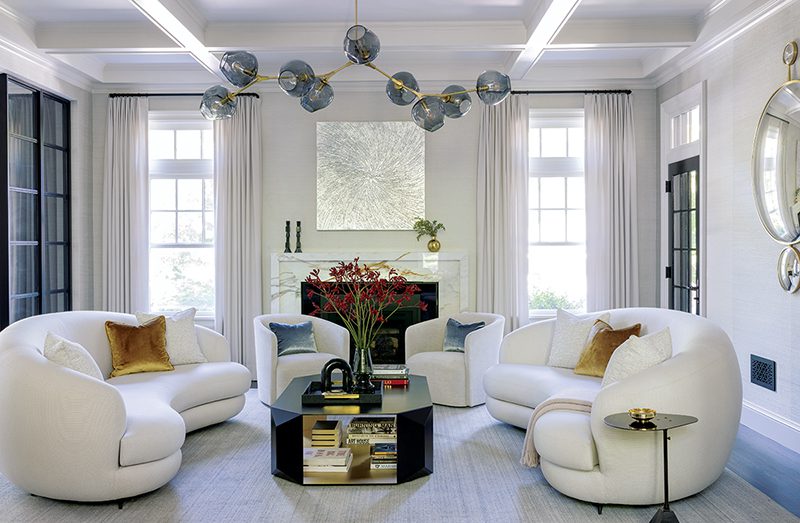
“Lighting is one of the most powerful tools in the home,” says Rowe, “because it directly influences how we feel, how we function within a space, and how we experience different moments throughout the day.” Lighting systems programmed to mimic circadian rhythms can automatically shift color temperature for cooler, energizing light in the morning for focus and warmer tones in the evening when you want to wind down. “They can create a home that feels more responsive and restorative amid the stimulation of city life,” says Rowe.
Automated window treatments can help mitigate natural light and solar heat; these include roller, honeycomb, and roman shades, vertical and horizontal blinds, and motorized drapery panels. In addition to comfort, they can also make HVAC systems more efficient, helping to reduce energy consumption.
“I believe that a well-thought-out lighting control system is one that works quietly in the background,” says Rowe. “It anticipates the needs of the homeowner without them ever having to think about it.”
Poor climate control hits you immediately. Who hasn’t walked into an ice-cold (or sweltering) building and instantly felt uncomfortable? A good climate system, however, is one that automatically maintains preferred temperatures, improving air quality, and adapting to daily routines. It creates a sense of comfort and consistency while remaining invisible.


Smart Home Technology Supports Wellness and Healthy Living
Air quality is equally important, especially in a home office. Today’s smart systems can track CO₂ levels, VOCs, humidity, and more—all of which have been shown to impact cognitive performance.
And then there’s noise. The acoustic environment is an important part of wellness, especially in the city where outside noise is a constant. A well-designed and distributed audio system can mitigate unwelcome noise by using calming music (or your favorite playlist) to enhance personal enjoyment.
“Distributed audio should disappear into the background,” says Rowe. “The best systems are heard but not seen.” Cities provide constant stimulation, often with sounds we wouldn’t necessarily choose. “I like the simple luxury of surrounding myself with sounds I like,” says Rowe. “It’s how I recharge.”
Finally, it’s important to remember that good technology and good design aren’t mutually exclusive. They suit the space they’re in and share the same goal: providing creature comforts—imperceptibly.
TSP Smart Spaces delivers a wide range of services in the home technology field, facilitating endless possibilities of smart home automation. Book an appointment today.
TSP Smart Spaces
500 Harrison Ave. Suite 108
Boston, MA 02118
617-267-3030
tsp.space
Architecture and interior design for this home is by Hacin.
Share





You must be logged in to post a comment.